Transporting mountain bikes on South Africa’s gravel roads is very different from driving on smooth tar. Between corrugations, dust, potholes and uneven terrain, bikes can easily shift, rub, loosen or even get damaged if they’re not secured properly.
If you regularly travel to trails, races or remote riding spots, understanding secure mountain bike transport is essential to protect your investment and avoid unnecessary damage.
Why Gravel Roads Are Tough on Bike Transport
Gravel and farm roads create:
- Constant vibration
- Side-to-side movement
- Sudden jolts from potholes
- Dust buildup around moving parts
Traditional racks that rely on narrow clamps or metal contact points can allow movement over long distances. Even small shifts can cause:
- Frame scratches
- Handlebar misalignment
- Brake rotor bending
- Cable strain
This is why off-road bike transport requires a solution designed for real South African conditions.
The Biggest Risks When Transporting Mountain Bikes
1. Frame-to-Frame Contact
When bikes are too close together without padding, they rub during travel. On corrugated roads, this friction increases significantly.
2. Loose Mounting Points
If a rack relies heavily on clamps or tension arms, vibration can gradually loosen them over time.
3. Overhead Lifting on Uneven Ground
Roof-mounted systems make loading harder, especially on uneven gravel surfaces. Lifting a heavy MTB overhead increases the risk of drops or slips.
What Makes a Transport System Gravel-Ready?
For proper secure bike transport on a bakkie, look for:
- Wide padded support areas
- Upright wheel positioning
- Minimal metal-on-frame contact
- Stable base support
- Even weight distribution
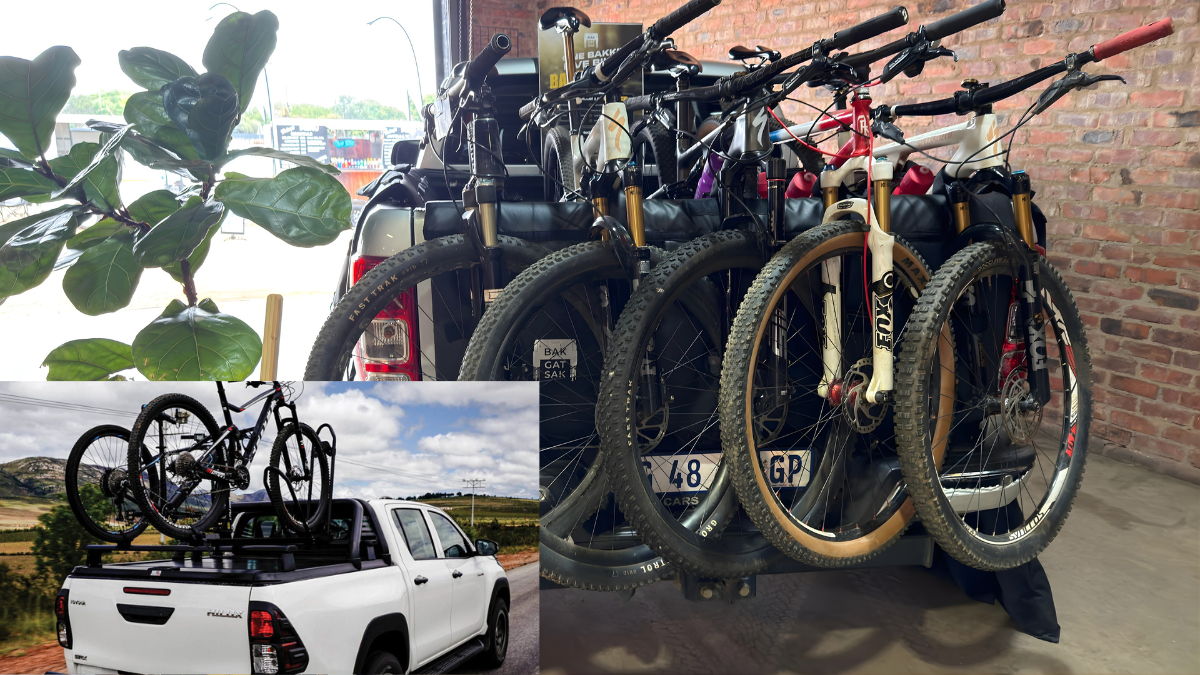
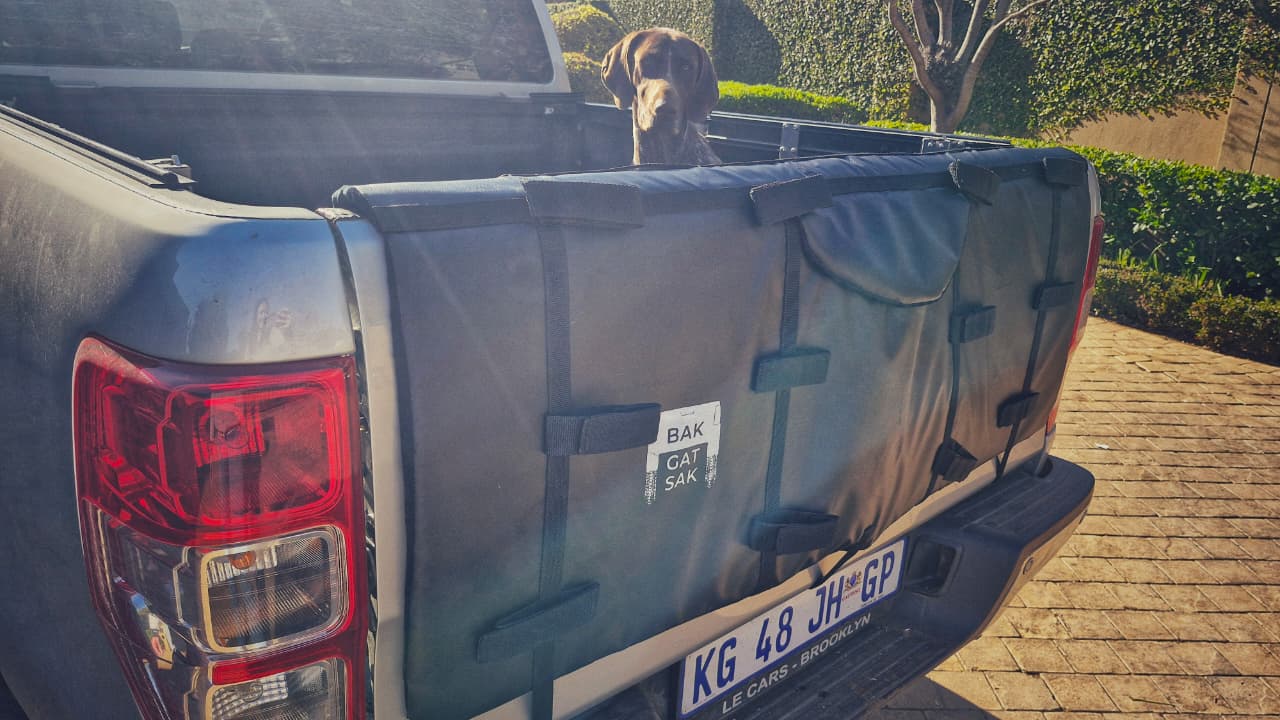
A properly fitted mountain bike tailgate pad spreads the load evenly across the tailgate and keeps bikes upright with their front wheels supported.
Why Tailgate Pads Work Well for Off-Road Bike Transport
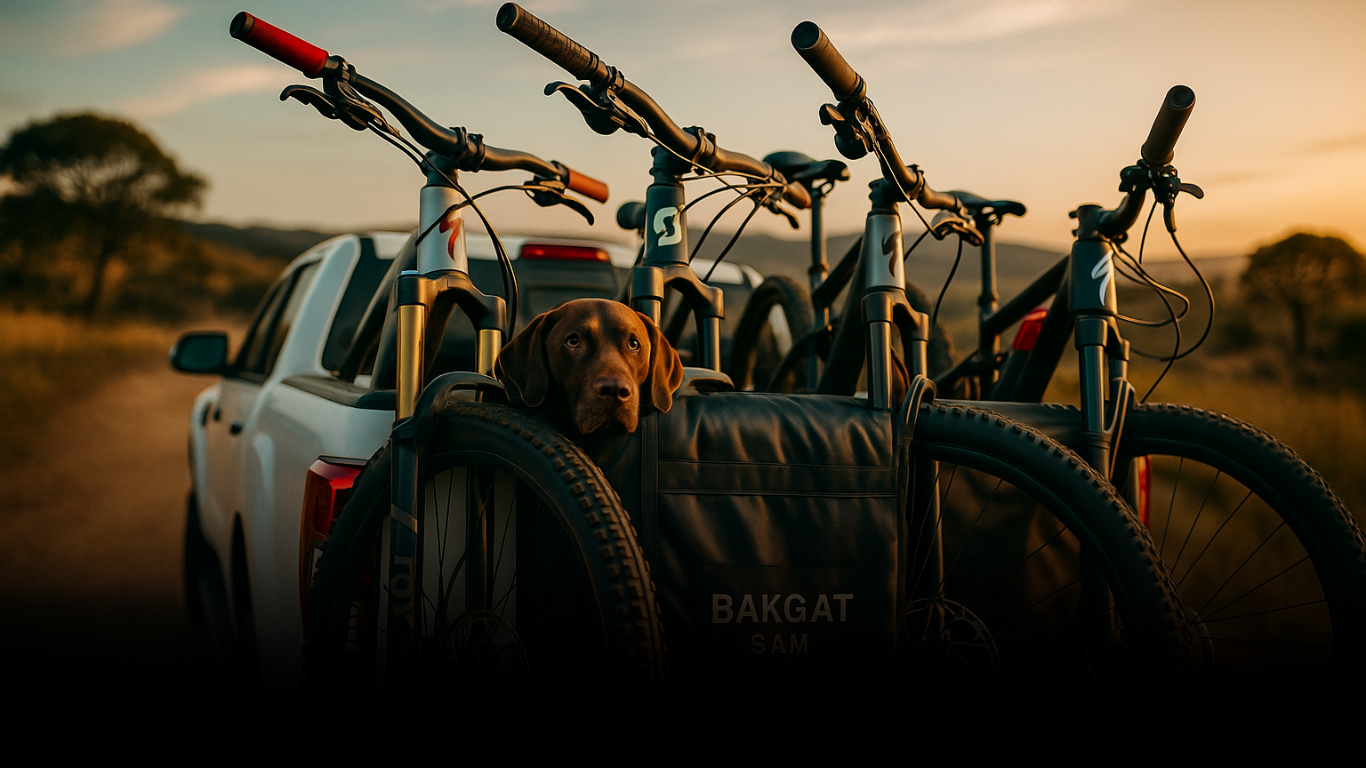
Products like the Bakgatsak are designed specifically for bakkies and rugged terrain.
Because the bikes rest upright over a padded tailgate:
- The frame is cushioned
- There is less movement on corrugations
- Bikes are evenly spaced
- No overhead lifting is required
- Multiple bikes remain stable together
This setup reduces the common problems associated with gravel travel.
Tips for Extra Secure Mountain Bike Transport
Even with a reliable system, best practice still matters.
✔ Check tyre alignment before departure
Ensure wheels are straight and not angled outward.
✔ Use frame separators if needed
For mixed bike sizes, additional padding helps reduce contact.
✔ Inspect straps after long gravel sections
Stop briefly to check tension on longer trips.
✔ Clean dust off padding regularly
Dust can act as fine grit if allowed to accumulate.
Protecting Carbon and High-End Mountain Bikes
South African mountain bikes are often high-value investments. Carbon frames and premium components need extra care.
A padded tailgate solution helps by:
- Reducing vibration transfer
- Minimising pressure points
- Avoiding clamp compression on carbon tubes
For riders serious about secure mountain bike transport, cushioning and stability matter more than complex metal systems.
Built for the South African Riding Lifestyle
South African cyclists don’t just ride city routes. We travel to:
- Trail centres
- Game farm tracks
- Remote mountain passes
- Weekend stage races
Transport systems need to handle gravel, heat and long distances. A locally designed solution built for bakkies makes practical sense for this environment.
Final Thoughts on Gravel-Ready Bike Transport
Gravel roads demand more from your transport setup than urban commuting. Stability, cushioning and secure positioning are key to protecting your bikes.
Choosing the right off-road bike transport solution ensures that when you arrive at the trail, your focus is on the ride, not on checking for scratches or loose components.
For riders looking for a durable, locally designed system built specifically for bakkies, a padded tailgate solution remains one of the most practical options available in South Africa.